Dynamic. Efficient. Collaborative.

Dynamic. Efficient. Collaborative.

Dynamic. Efficient. Collaborative.

Distyl

Distyl

Distyl

Role

Product Designer

Duration

8 Weeks, Oct. 2024 – Dec. 2024

Tools

Figma, Pen, and Paper

Team

3 Designers

5 Developers

1 Project Manager

1 Project Mentor

Overview

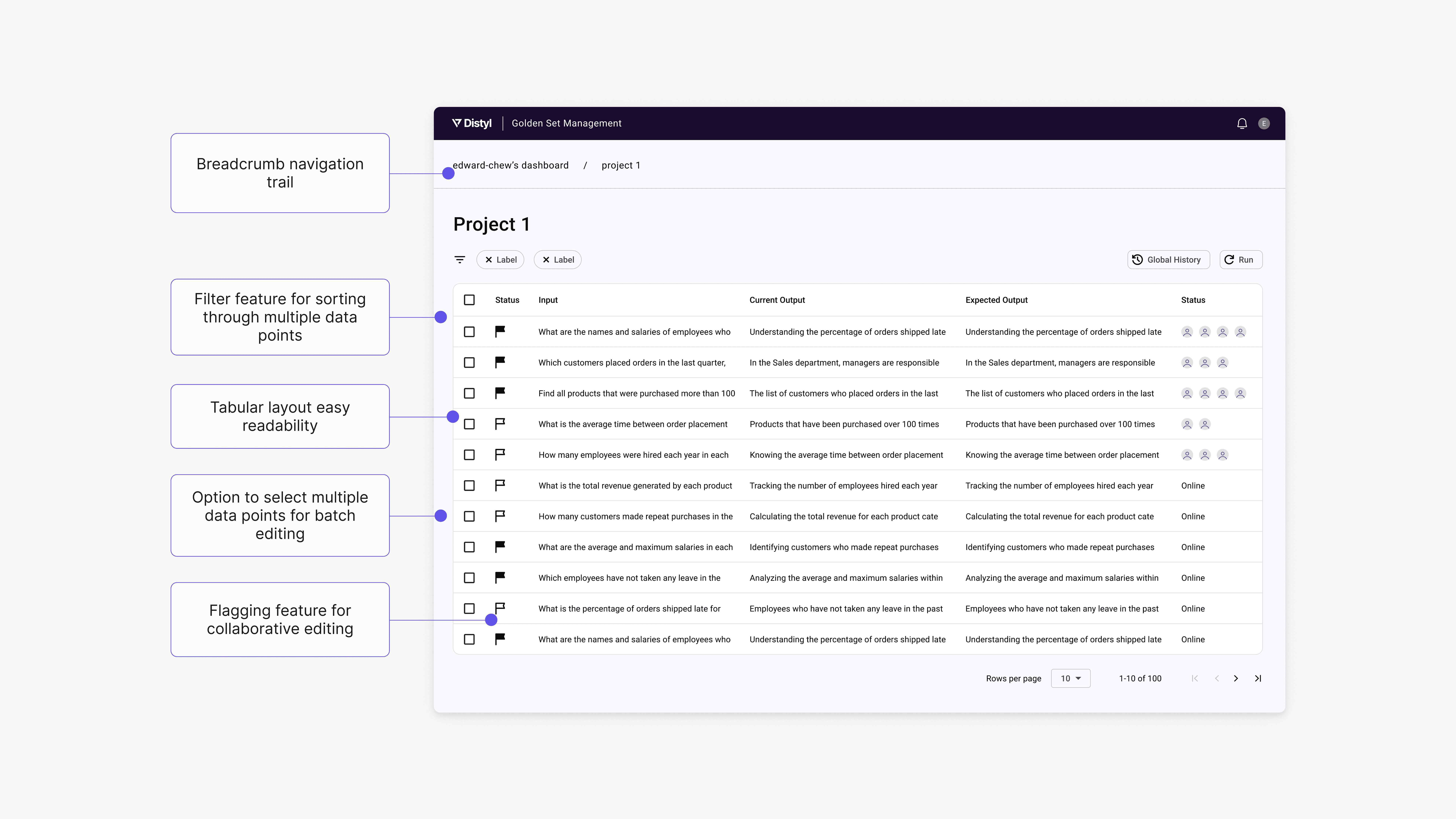
Distyl utilizes LLM-driven solutions to deliver enterprise AI solutions for non-tech Fortune 500 companies in finance, healthcare, and IT. During an 8-week design and development sprint, our team developed a data set management application for Distyl—an internal tool that streamlines the development of LLM-driven solutions. In order to enhance work productivity, we worked to create an application that would assist the Distyl team efficiently compare large amounts of expected output and current output data.

Problem

Problem

Problem

How might we create a centralized platform for the Distyl team to manage data?

Goals

  • Create a dynamic tool that can integrate large amounts of system models

  • Restructure the visual hierarchy to be user-centered and organized

  • Enhance usability and streamline collaborative workflow

Research Goals

Pinpointing Our Goals

Pinpointing Our Goals

Pinpointing Our Goals

Before exploring our clients' needs, we defined three key research goals to guide our focus. These goals shaped our overarching "How might we" statement and informed the development of targeted user interview questions.

User Interviews

Empathizing with the Distyl Team

In total, we interviewed 4 AI strategists, 1 data scientist, and 1 engineer from Distyl. During these interviews, we asked the AI strategists to showcase their workflow and explain their pain points. We also asked how we could improve their user experience and workflow productivity.

Define

Pinpointing Key Pain Points

Pinpointing Key Pain Points

Pinpointing Key Pain Points

Following user interviews, we identified three key pain points for the Distyl team. They relied on tools like Excel, Google Sheets, and Notion to manage data, but found them inflexible, difficult to organize at scale, and lacking collaborative features. Ultimately, these tools were not dynamic enough to support the specific needs of comparing LLM models.

User Flows

Mapping Out the User's Steps

Before starting the iterative design process, we developed a comprehensive user flow to map the user journey. This ensured full coverage of user interactions and enabled more efficient and informed design decisions.


Mid-Fidelity Wireframes

Creating the Basic Framework

Insights from our user interviews and user flow informed our design approach, driving multiple rounds of iterative sketching and the creation of mid-fidelity wireframes. Ongoing feedback from the Distyl team helped us identify and refine key areas for improvement.


Improving From Feedback

Improving Features with Client Feedback

Guided by client feedback, we refined key features to enhance usability and workflow efficiency. The result is a dynamic tool capable of presenting large volumes of system models, while offering users a clear, organized interface that streamlines communication and collaboration.


Reflection

Meet the Team

Overall, the experience was incredibly rewarding because it provided me with the opportunity to collaborate with talented designers, developers, and experienced industry professionals. Working closely with such a diverse and skilled team not only enhanced my technical skills, but also deepened my understanding of effective collaboration in a cross-functional team.

© 2025

Made with 🍵 and 🤍 by Nanette Ta

Contact

nanetteuta@gmail.com

Socials